
In today’s fast-paced world, television technology has advanced at an incredible rate. From black-and-white screens to HD, and now to 4K, 6K, and even 8K displays, the evolution has transformed television from just a viewing device to an integral part of home entertainment. The rise of smart TVs and smart IPTV has revolutionized how we access and consume content. What once began with traditional TV broadcasts has now evolved into an era of on-demand streaming and interactive viewing experiences. According to the latest industry analysis, over 75% of global TV users now utilize at least one online video streaming service.
1. What is a Smart TV?

A smart TV is the next generation of television, equipped with an operating system that allows users to download and install applications. Unlike traditional televisions, which are limited to broadcast signals, a smart TV offers the capability to access online video, music, and other data streams through broadband internet.
However, the quality and features of smart TVs can vary significantly between brands and models. Some of the common issues faced by users include:
Limited app compatibility or inability to install third-party apps.
Storage limitations, which can lead to slow performance and lag.
Slow software updates or limited sideloading capabilities.
Additionally, while smart TVs often offer great features, they come at a steep price, typically starting at $500. Even then, their average lifespan is under three years, often leading to issues such as lagging or screen blurring after prolonged use.
2. What is Smart IPTV?
Smart IPTV refers to internet-based television services delivered over high-speed broadband networks, rather than through traditional broadcast signals. IPTV (Internet Protocol Television) uses dedicated network protocols to deliver content like digital TV, time-shifted TV, and interactive TV services.
Unlike smart TVs, which act as a hardware device, smart IPTV is a service that can be accessed through a set-top box or compatible device. IPTV allows users to access a variety of content through their broadband connection, but it is restricted by the service provider’s exclusive platform.
The key difference is that IPTV requires a service subscription and can only be used through an IPTV-enabled device. Users are unable to install the service independently and must pay the operator for access.
3. Key Differences Between Smart TV and Smart IPTV
Feature | Smart TV | Smart IPTV |
|---|---|---|
Nature | Hardware product (the TV itself) | Service-based product, powered by the internet |
Content Source | Apps, internet websites, app stores | Service provider’s exclusive platform |
Platform Openness | Users can install apps (if supported) | Closed system, content controlled by operator |
Upgrade Method | System updates and app installations | Upgrades depend on the service provider |
Network Requirements | Regular internet connection | Exclusive network connection needed from the provider |
In terms of usage, smart TVs function as platforms for content access, while smart IPTV focuses on providing a specialized viewing experience tailored for TV consumption.
4. Requirements for Using Smart IPTV
To enjoy smart IPTV, users must meet certain technical requirements:
4.1 Stable Broadband Connection
A minimum of 20Mbps bandwidth is necessary to stream content without buffering. IPTV services depend on a stable internet connection to deliver high-quality video streams.
4.2 Compatible Devices
Smart TVs or TV boxes running Android 10 or higher, which support third-party app installations, or an IPTV set-top box are required. These devices allow you to access and control IPTV services effectively.
4.3 Service Subscription
A valid IPTV service subscription is necessary to access content. For multiple TV usage, additional subscriptions may be required.
4.4 Software Support
Ensure that your hardware is compatible and has enough memory to run IPTV applications smoothly. The device should support safe and seamless installation of service-specific apps.
5. Best IPTV Set-Top Boxes
If you are looking for a cost-effective alternative to expensive smart TVs or monthly subscriptions, IPTV set-top boxes like the we2usat K3 Pro+ are an excellent choice. These boxes support both smart and traditional TVs, offering a unified, high-quality IPTV experience.
5.1 We2usat K3 Pro+
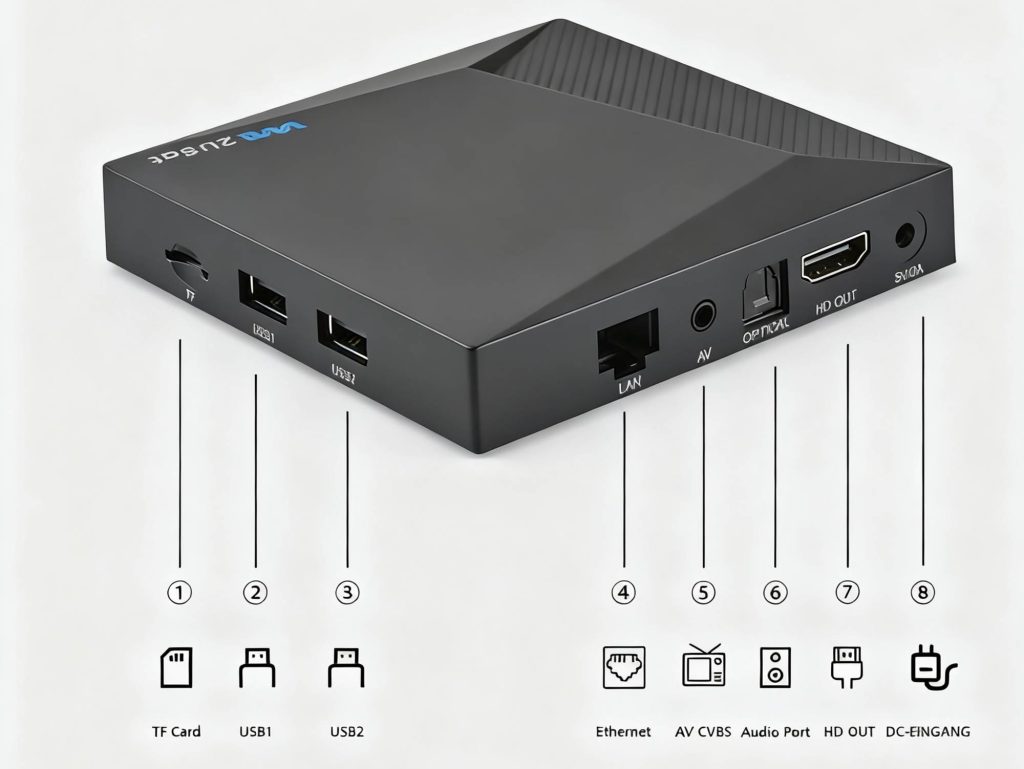
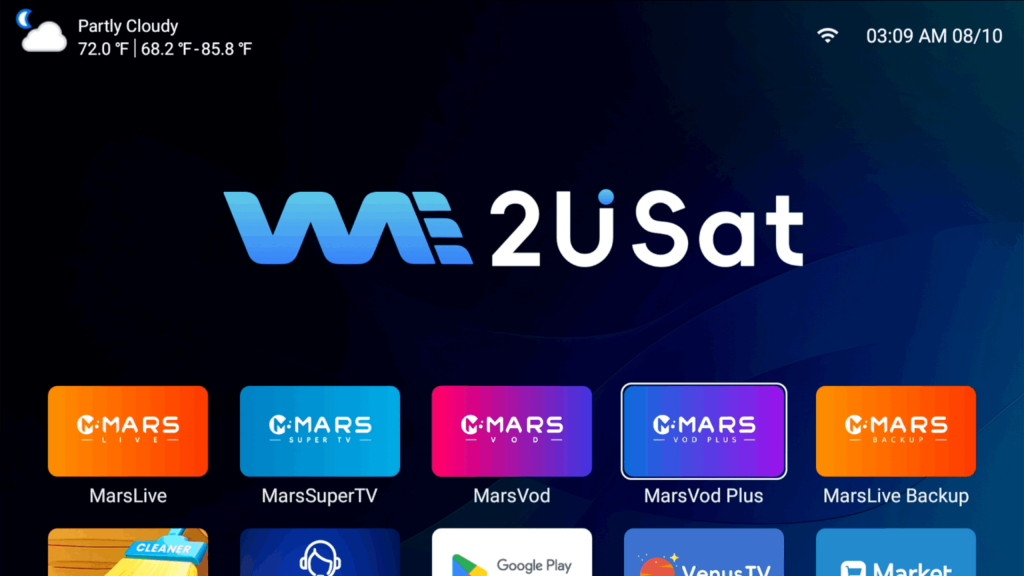
The We2usat K3 Pro+ is designed to be fully compatible with smart and traditional TVs, offering a hassle-free setup with both HD and AV interfaces. The Mars Live app, pre-installed on this device, integrates multiple content sources, simplifies navigation, and provides a professional, stable live TV streaming service.
6. Why Choose IPTV Set-Top Boxes?
6.1 Built-in IPTV Services
The We2usat K3 Pro+ integrates robust IPTV functionality, categorizing and managing both live and on-demand content. It also supports program guides and 7-day playback. You can record shows, ensuring you never miss your favorite moments. The device is plug-and-play, with simplified network setup and automatic parameter configuration.
6.2 Multimedia Application Compatibility
IPTV set-top boxes like the We2usat K3 Pro+ provide exceptional compatibility with major streaming platforms and a wide variety of apps, making it easier to access your favorite content on-demand.
6.3 Multi-Format Decoding Support
The device supports advanced decoding technologies such as H.264, H.265, and AV1, ensuring smooth playback of high-definition video. It also supports HDR technology for vibrant colors and sharper contrast, adjusting automatically based on your network conditions.
6.4 Customizable Installations and Entertainment Setup
The IPTV set-top box is perfect for those who want a personalized home entertainment system. Users can customize their installation and create a unique entertainment matrix that suits their family’s needs.
